


Key takeaways
- Ocean transit from Nhava Sheva to Tema typically runs 24 to 35 days, with sailings once or twice a week.
- Nhava Sheva (JNPA) and Mundra are the two Indian gateways most importers use for Ghana-bound cargo.
- Ghana import charges are assessed on CIF value and processed through the ICUMS single window, so accurate documents decide your release speed.
- Choose FCL when you have enough volume to fill a container; LCL shares space and suits smaller consignments.
- A forwarder who books both the Indian export leg and the Tema clearance leg removes most of the handoff risk.
Sea freight from India to Ghana usually takes 24 to 35 days port to port, moves through Nhava Sheva or Mundra on the Indian side, and lands at the Port of Tema. If you are sourcing goods from Indian suppliers and shipping by ocean, the decisions that actually move the needle are which Indian port you load from, whether you book a full container or share one, and who handles your customs filing at Tema.
This guide walks through each of those decisions with current numbers, the documents Ghana Customs expects, and how an experienced forwarder keeps an India-to-Ghana shipment on track from booking to delivery.
Shipping routes for sea freight from India to Ghana
There is no direct, dedicated service from India to Ghana. Containers move on mainline services that transship through a hub, commonly in the Mediterranean, the Middle East, or at a West African feeder port. That routing is why transit times vary from one sailing to the next.
Most Ghana-bound cargo loads at one of two Indian gateways:
- Nhava Sheva (Jawaharlal Nehru Port, JNPA) near Mumbai. It is India's largest container port and the default choice for shippers on the west coast. JNPA handled 8.17 million TEUs in FY 2025-26, which was 53.93% of all container traffic across India's major ports, according to World Cargo News.
- Mundra in Gujarat, India's largest private port and a strong option for cargo originating in northern and western India.
Chennai on the east coast is a third option, mainly for suppliers based in southern or eastern India, though it often adds routing distance to West Africa.
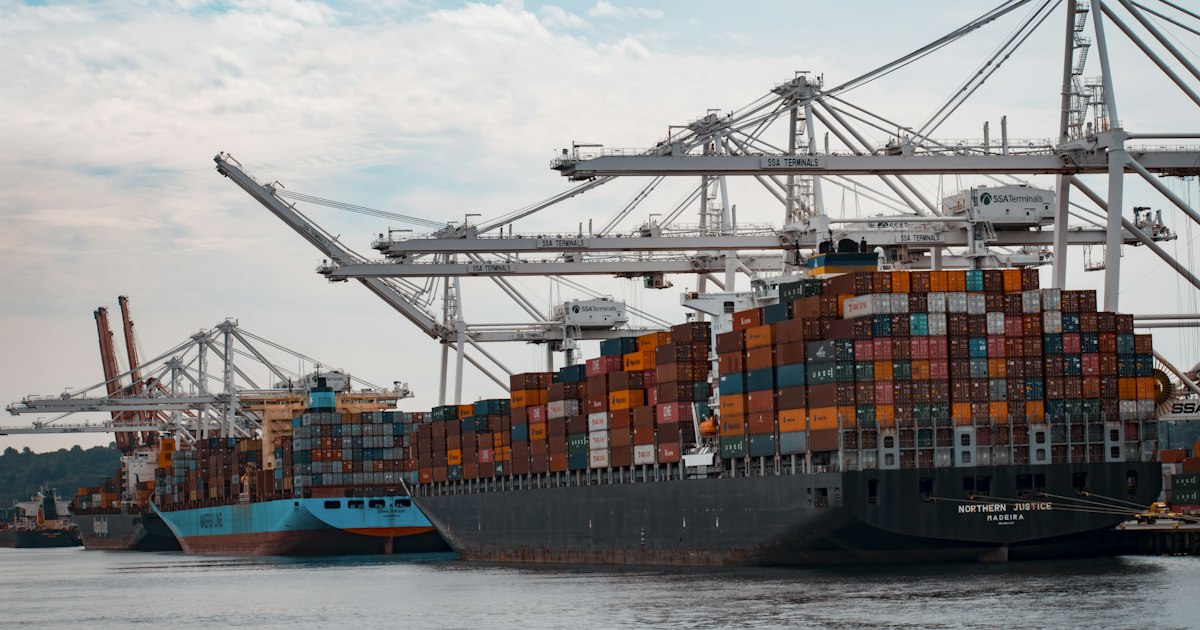
On the Ghana side, nearly all containerised sea freight arrives at the Port of Tema. The port recently expanded its Terminal 3 with a 16-metre draft and berths able to take vessels up to 18,000 TEUs, lifting container capacity to 3.7 million TEUs a year, as reported by World Cargo News. That depth matters because it lets larger, more direct services call at Tema instead of forcing extra transshipment legs.
If you want a broader view of ocean options into the country, our dedicated guide to sea freight into Ghana covers the main lanes and what drives pricing.
Transit times and typical costs
Plan on roughly 24 to 35 days from an Indian port to Tema on a port-to-port basis. Sailings on this lane typically run once or twice a week, so your booking date and the next available vessel matter as much as the ocean leg itself. Add a few days for customs clearance and inland delivery once the box lands.
Two things stretch that window:
- Transshipment waits. Because cargo changes vessels at a hub, a missed connection can add several days.
- Port congestion. Dwell time at the discharge port varies with volume and berth availability, and it can add days to the schedule you were quoted.
Cost is harder to pin to a single figure because ocean rates move with fuel, season, and capacity. What stays constant is the structure of your landed cost:
- Ocean freight from the Indian port to Tema.
- Origin charges in India (terminal handling, documentation, export customs).
- Destination charges at Tema (terminal handling, delivery order, demurrage if you clear slowly).
- Duties and taxes payable to Ghana Customs.
A full container usually carries a lower cost per unit than shared space once you are moving enough volume. If your margins are tight, the levers that actually reduce spend are consolidation, container utilisation, and clearing quickly to avoid storage.
Documents and customs considerations
Ghana assesses import charges on the CIF value of your goods, cost, insurance, and freight, and everything is filed through the Integrated Customs Management System (ICUMS), the country's digital single window. Clean, consistent paperwork is the single biggest factor in how fast your container leaves Tema.
The core documents for an India-to-Ghana shipment are:
- Commercial invoice from the Indian supplier, showing an accurate value and HS codes.
- Packing list matching the invoice line by line.
- Bill of lading issued by the carrier or your forwarder.
- Permits or certificates for regulated goods, for example food, pharmaceuticals, or electronics.
Import duty in Ghana follows the ECOWAS Common External Tariff, with rates set by HS code. On top of duty, shipments attract VAT and a set of statutory levies, all calculated during the ICUMS declaration. Because the rates depend entirely on classification, getting your HS codes right at the invoice stage prevents the most common reassessments and delays. Ghana Customs sits under the Ghana Revenue Authority, whose official guidance sets out the current duty and levy structure.
For a step-by-step view of the clearance process and the exact paperwork, see our guides on the documents required to import goods into Ghana and the full Ghana customs clearance procedures.
FCL and LCL options from Indian ports
Your two loading options from India are a full container load (FCL) or a less than container load (LCL).
FCL means you book an entire 20ft or 40ft container for your cargo alone. It is the right call when:
- Your goods fill most of a container, or close to it.
- You want the box sealed at origin and opened only at destination, which reduces handling.
- You are shipping sensitive or high-value cargo and want fewer touch points.
LCL means your cargo shares a container with other shippers' consignments. It suits you when:
- You have a smaller volume that would waste space in a full container.
- You would rather pay only for the cubic metres you use.
- You can accept a little extra handling at the consolidation and deconsolidation points.
The trade-off is cost per unit versus flexibility. Below a certain volume, LCL is cheaper outright. As your volume grows, FCL becomes both cheaper per unit and faster, because it skips the consolidation steps. A rough rule many importers use: once you are filling more than half a container, price out FCL before you commit to LCL. Our dedicated comparison, FCL vs LCL Shipping: Which Should You Choose?, walks through the break-even point with examples.
How BJH manages India-to-Ghana shipments
The hardest part of an India-to-Ghana move is not the ocean leg. It is the handoffs: supplier to Indian port, Indian port to carrier, carrier to Tema, Tema to your warehouse. Each handoff is a place where a wrong HS code, a mismatched packing list, or a missed sailing can cost you days.
BJH Logistics manages both ends of that chain. On the Indian side, we book space with carriers serving the Nhava Sheva and Mundra lanes, coordinate origin documentation, and confirm the cargo is ready for the sailing we quoted rather than the one after it. For importers consolidating several suppliers, we arrange LCL groupage so you are not paying for empty container space.
At Tema, we file your declaration through ICUMS, classify goods correctly the first time, and clear the container before storage charges build up. From there, our road transport moves your cargo to its final destination in Ghana. Because one team owns the booking, the clearance, and the delivery, there is no gap between forwarders where a shipment stalls and no one answers for it.
If you are weighing providers, it pays to ask each forwarder whether they handle both the Indian export leg and the Tema clearance leg, or just one end.
The next step is simple: gather your supplier's commercial invoice and packing list, note the total volume and weight, and send them to BJH Logistics for a routed quote. With those two documents we can confirm whether FCL or LCL is cheaper for your shipment, name the sailing, and give you a landed-cost estimate for your goods arriving at Tema.
Frequently asked questions
How long does sea freight from India to Ghana take?
Port-to-port transit from Nhava Sheva to Tema is usually 24 to 35 days. Add a few days for customs clearance and inland delivery once the container lands.
Which Indian ports ship to Ghana?
Nhava Sheva (JNPA) near Mumbai and Mundra in Gujarat handle most Ghana-bound ocean cargo. Chennai is an option for east coast shippers.
Should I use FCL or LCL from India?
Use FCL when your cargo fills most of a 20ft or 40ft container. Use LCL when you have smaller volumes and want to pay only for the space you use.
What documents do I need to import from India into Ghana?
You need a commercial invoice, packing list, bill of lading, and any permits for regulated goods. Everything is filed through Ghana's ICUMS system before release at Tema.
Where does cargo from India arrive in Ghana?
Almost all containerised ocean cargo arrives at the Port of Tema, which handles the large majority of Ghana's container traffic.
