

Key takeaways
- Sea freight from China to Tema Port takes roughly 30 to 45 days door to door, while air freight lands in about 5 to 10 days.
- China supplies 22.2% of Ghana's total imports, so the route is well served by regular sailings and consolidation options.
- Ghanaian importers pay a 15% VAT plus a 2.5% NHIL and a 2.5% GETFund levy on top of ECOWAS duties of 0% to 35%.
- Full container loads suit large, dense cargo; shared container (LCL) shipping suits smaller orders and keeps costs low.
- Accurate commercial invoices, packing lists and bills of lading are the single biggest factor in avoiding customs delays at Tema.
Sea freight from China to Ghana usually takes 30 to 45 days and lands at Tema Port, while air freight gets your goods there in about 5 to 10 days at a higher cost. Shipping from China to Ghana is a well-travelled route because China supplies a large share of what Ghanaian businesses import, which means regular sailings, plenty of consolidation options and competitive rates for importers who plan ahead.
The way goods are collected from suppliers can affect the shipment plan as much as the transport mode. Read about working with a China forwarder for Ghana when several purchase orders, release dates or consolidation instructions need to be reconciled before cargo is handed over.
This guide walks through the main routes, realistic costs and transit times, the customs documents you need, and practical ways to keep your landed cost down.
What are the main shipping routes from China to Ghana?
Goods leave major Chinese ports such as Shanghai, Shenzhen, Ningbo and Guangzhou, then travel by sea around the Cape of Good Hope or through the Suez Canal to reach Tema Port in Ghana. The route matters because it drives both your transit time and your freight rate. China is Ghana's single largest supplier, accounting for 22.2% of total imports in the first quarter of 2025 (Ghana Statistical Service, 2025).
Tema Port, near Accra, is the main entry point and handles roughly 98% of the country's container traffic (Ghana Ports and Harbours Authority via Citi Newsroom, 2024). Takoradi Port in the west handles bulk and project cargo, but almost all finished goods from China clear through Tema.
For air freight, cargo moves from hubs like Guangzhou, Shenzhen and Hong Kong into Kotoka International Airport in Accra. Air works best for small, high-value or urgent shipments, not bulky goods.
Sea freight: FCL vs LCL
You have two sea options. A full container load (FCL) gives you a whole 20ft or 40ft container, which suits large or dense orders. A less than container load (LCL) shares container space with other importers and suits smaller shipments. Choosing between them is one of the biggest cost decisions you will make, and our guide on FCL vs LCL shipping breaks down the trade-offs.
How much does shipping from China to Ghana cost?
Your total landed cost has two parts: the freight itself and the taxes due at Tema. Ocean freight rates move constantly with fuel prices, demand and global capacity, so any fixed number online goes stale fast. The reliable approach is to request a live quote based on your cargo volume, weight and the Chinese port of origin.
What stays fairly predictable is the tax side. Ghanaian importers pay a standard VAT of 15%, a National Health Insurance Levy (NHIL) of 2.5% and a GETFund levy of 2.5% (PwC Tax Summaries, 2025). On top of that sits import duty under the ECOWAS Common External Tariff, which ranges from 0% on essential goods to 5% on raw materials, 10% on intermediate goods, 20% on finished goods and 35% on sensitive products.
A few factors push your freight cost up or down:
- Container size and type. A 40ft container costs more than a 20ft but carries far more, lowering your cost per unit.
- FCL or LCL. Small orders ship cheaper as LCL; once you fill roughly half a container, FCL often wins.
- Port of origin. Rates differ between Shanghai, Shenzhen and inland cities that need trucking to a port first.
- Season. Rates climb before major Chinese holidays and the year-end peak.
Because duties vary so widely by product category, the tariff code you declare has a real effect on your bill. For broader tactics, see our guide on how to reduce shipping costs when importing to Ghana.
How long does the journey actually take?
Plan for 30 to 45 days end to end by sea, and 5 to 10 days by air. The sea figure covers the ocean leg plus port handling, customs clearance and inland delivery to your door, not just the time the ship spends at sea. Delays almost always come from paperwork and clearance, not the vessel.
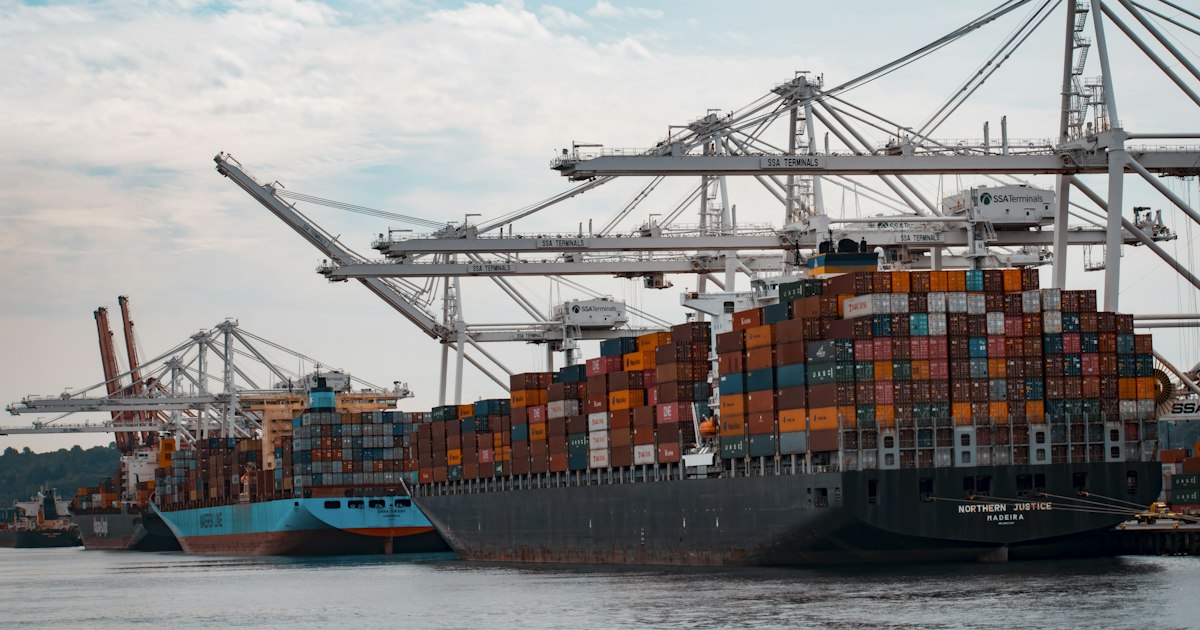
Transit time breaks down roughly like this:
- Ocean sailing: about 25 to 35 days from a major Chinese port to Tema.
- Port and customs at Tema: a few days to over a week, driven mainly by how clean your documents are.
- Inland haulage: one to three days to most destinations in Ghana.
Air freight compresses all of this. The flight itself takes under a day, and clearance at Kotoka plus delivery usually wraps up within a week. When a deadline or a stockout is on the line, the premium can pay for itself.
What documents and customs steps do you need?
Clean, accurate paperwork is the fastest way to avoid holds at Tema. Ghana clears imports through the Integrated Customs Management System (ICUMS), and every declaration relies on a consistent set of documents. Mismatched values or vague descriptions between your invoice and packing list are a common cause of inspections and demurrage.
The core documents for a China shipment are:
- Commercial invoice showing the true transaction value.
- Packing list matching the invoice line by line.
- Bill of lading (sea) or air waybill (air).
- Import Declaration Form (IDF) and the correct HS tariff classification.
- Certificates where required, such as conformity or product-specific permits.
Getting the tariff classification and valuation right is where many importers lose time and money. A licensed clearing agent handles the ICUMS declaration, duty calculation and release on your behalf. If you are vetting one, our checklist on how to choose a customs clearing agent in Ghana is a good starting point. Understanding your trade terms also helps, because the agreed Incoterm decides who pays for freight, insurance and duties at each stage.
How do you source and consolidate from China?
Smart sourcing starts long before the goods ship. Confirm supplier quality, agree clear Incoterms and, where possible, group several small orders into one shipment. Consolidation is the single most effective lever for small and medium importers, because it turns many expensive mini-shipments into one efficient container load.
A few habits save real money:
- Use one China warehouse address. Have suppliers deliver there so a forwarder can combine and inspect goods before export.
- Right-size the shipment. Fill a container efficiently rather than shipping half-empty.
- Standardise packaging. Uniform cartons stack better and cut wasted space.
- Agree Incoterms upfront. Know exactly where your supplier's responsibility ends and yours begins.
Consolidation also simplifies customs, since one bill of lading and one declaration replace several. That means fewer documents to reconcile and fewer chances for a mismatch to trigger an inspection.
How BJH Logistics handles China-to-Ghana imports
BJH Logistics manages the full China-to-Ghana journey so you deal with one point of contact instead of a chain of brokers. We arrange sea and air freight from the major Chinese ports, consolidate cargo from multiple suppliers, and handle customs clearance at Tema through ICUMS.
Our team books the right service for your cargo, whether that is a cost-efficient LCL slot, a dedicated FCL, or fast air freight when timing is tight. We prepare and check your documentation before the goods sail, which is where most delays are won or lost, then coordinate road haulage to your final destination anywhere in Ghana.
For importers who want a single partner across freight, customs and delivery, this removes the guesswork from a long and document-heavy route.
If you are planning your first order or trying to tighten the cost of a regular one, the next step is simple: gather your supplier details, product descriptions and volumes, then request a quote so you can compare sea and air against your deadline. With accurate figures in hand, you can book the route that fits your budget and your timeline, and avoid the delays that catch unprepared importers at Tema.
Frequently asked questions
How long does shipping from China to Ghana take?
Sea freight to Tema Port usually takes 30 to 45 days, including inland haulage and customs. Air freight is far quicker at around 5 to 10 days, but costs several times more per kilogram.
How much does it cost to ship a container from China to Ghana?
Rates move with the market, so get a live quote. Cost depends on container size (20ft or 40ft), whether you book FCL or LCL, the Chinese port of origin and current fuel and freight indices.
What taxes do I pay to import goods from China into Ghana?
You pay import duty under the ECOWAS Common External Tariff (0% to 35% by product), plus 15% VAT, a 2.5% NHIL and a 2.5% GETFund levy. Other levies may apply depending on the goods.
Which Ghanaian port handles cargo from China?
Tema Port is the main gateway, handling about 98% of Ghana's container traffic. Takoradi Port serves the western region and bulk cargo. Most China shipments arrive through Tema.
Can I combine small orders from several Chinese suppliers?
Yes. A freight forwarder can consolidate goods from multiple suppliers into one shipment at a China warehouse, then ship as a single LCL or FCL load. This lowers your per-unit cost.
